Green Cloth Napkins Buyer's Guide: Quality & Durability

Affiliate disclosure: Some links on this page are affiliate links. If you buy through them we earn a small commission at no extra cost to you. Recommendations are research-driven; we don't claim personal use of every product reviewed. Product prices and availability are accurate as of the date published and are subject to change. Always check Amazon for current pricing before purchasing. Learn more.
Quick Picks
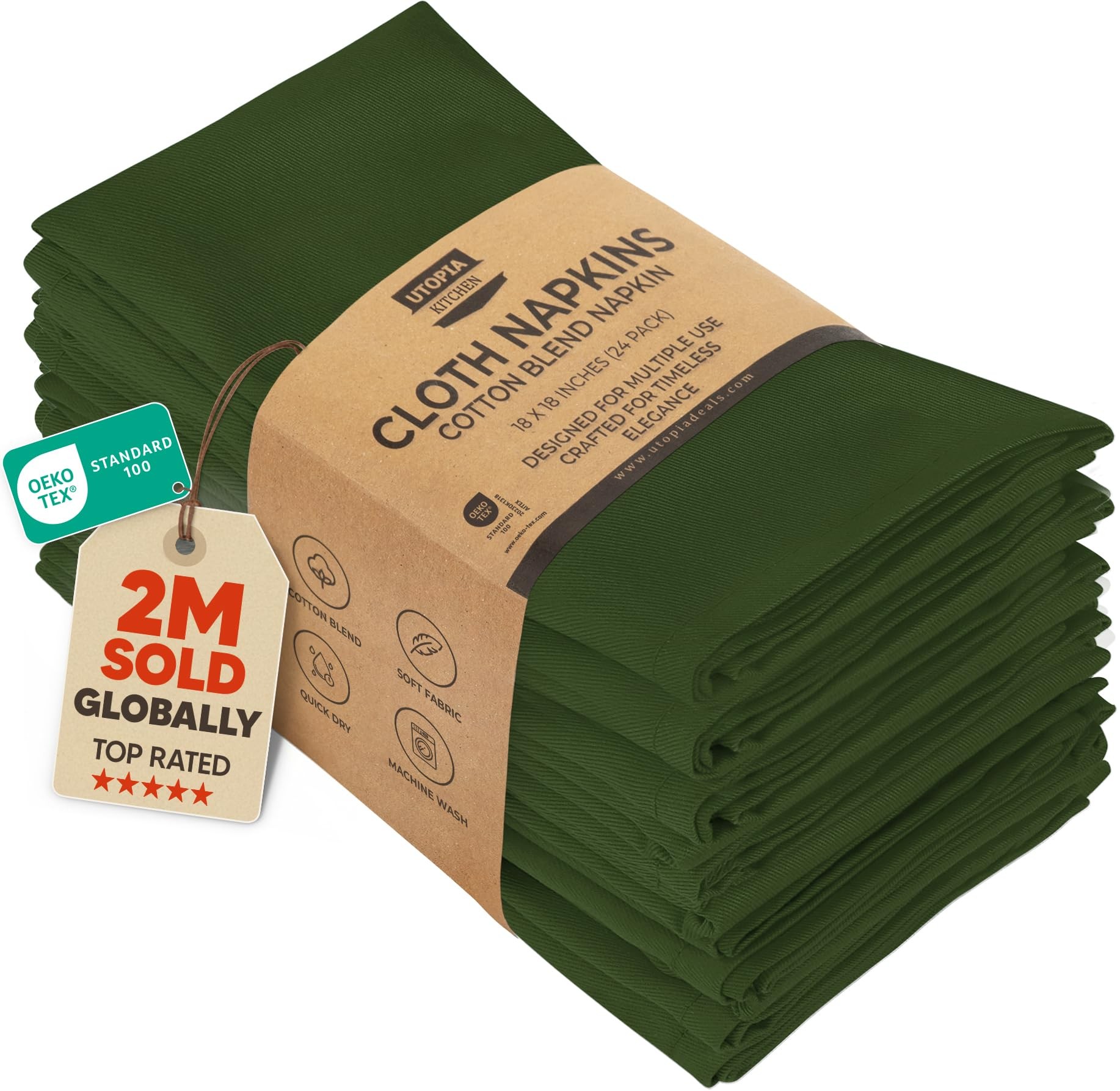
Utopia Kitchen Cloth Dinner Napkins Green Set of 12
12-pack at budget pricing makes cloth napkins genuinely cost-competitive with disposable paper napkins over a season
Buy on AmazonApril Cornell Garden Floral Cloth Napkins Set of 4
April Cornell's botanical print coordinates with their tablecloths for a matched set
Check availability at April Cornell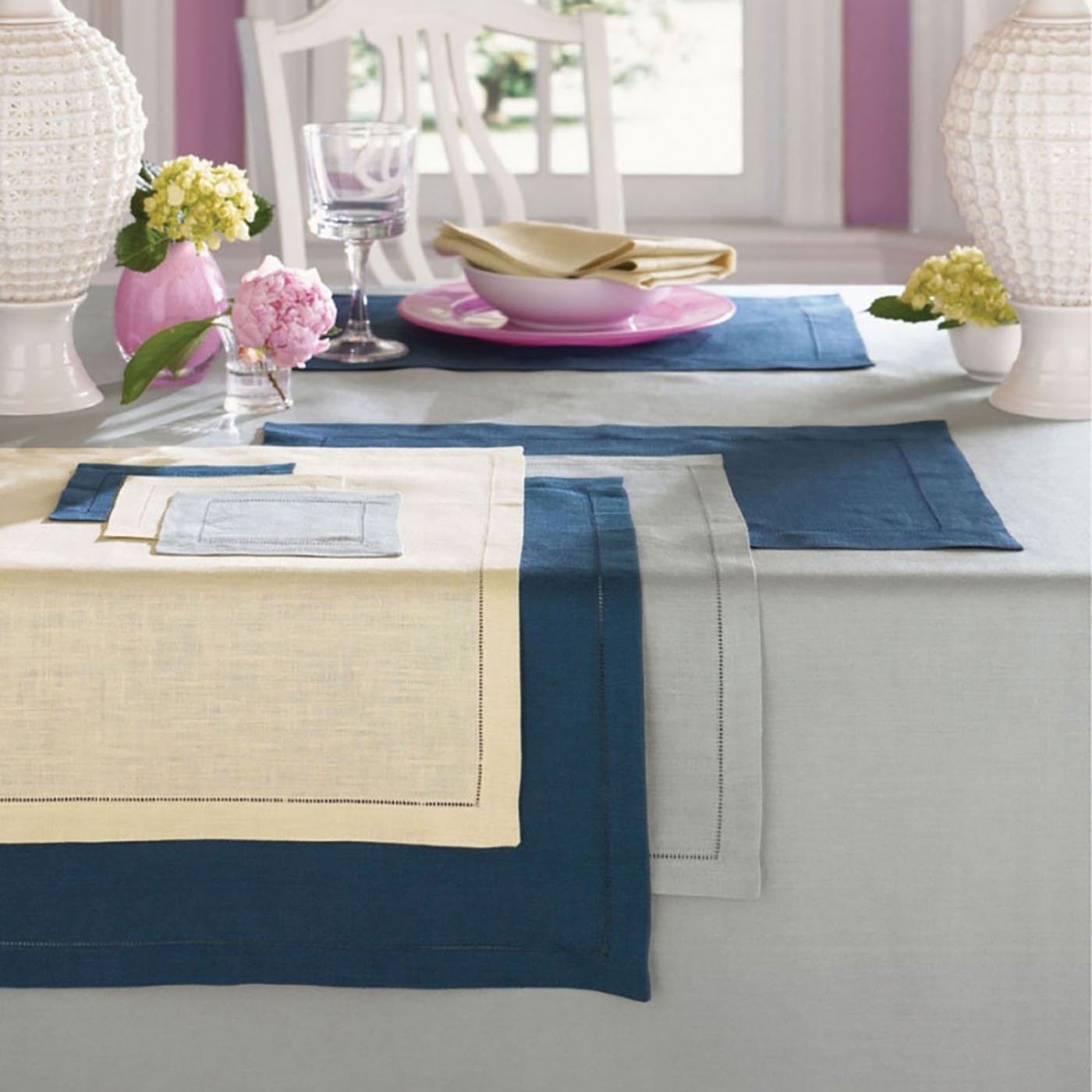
Sferra Hemstitched Linen Napkins Set of 4
Hand-hemstitched border on Italian linen , the detail that distinguishes these from machine-finished napkins at any price
Buy on Amazon| Product | Price Range | Top Strength | Key Weakness | Buy |
|---|---|---|---|---|
| Utopia Kitchen Cloth Dinner Napkins Green Set of 12 best overall | $ | 12-pack at budget pricing makes cloth napkins genuinely cost-competitive with disposable paper napkins over a season | Cotton-poly blend pills slightly after repeated washing , not the texture of a restaurant-grade linen napkin | Buy on Amazon |
| April Cornell Garden Floral Cloth Napkins Set of 4 also consider | $$ | April Cornell's botanical print coordinates with their tablecloths for a matched set | Sold in sets of 4 , a table of 8 requires two orders | Check Price |
| Sferra Hemstitched Linen Napkins Set of 4 also consider | $$$ | Hand-hemstitched border on Italian linen , the detail that distinguishes these from machine-finished napkins at any price | Premium linen requires ironing after each wash to achieve the pressed formal finish | Buy on Amazon |
Cloth napkins make an ordinary dinner feel considered , and green ones, in particular, bring something to a table that white or ivory simply can’t. Whether you’re setting a spring brunch or hosting a dinner that deserves more than paper, finding napkins that hold up after a season of washing matters as much as how they look on the table. The full range of Table Linens is worth exploring if you’re building out a coordinated setting.
The difference between a napkin that disappoints and one you’ll still be using three years from now comes down to fabric weight, construction quality, and how the piece handles repeated laundering. Those are the criteria I used to narrow this list.
What to Look For in Cloth Napkins
Fabric and Fiber Content
The fiber content of a napkin determines nearly everything else about it , how it feels against the skin, how well it absorbs, how it ages over time, and how much care it demands between uses. Cotton and linen are the two workhorses of the category, and both reward you differently.
Cotton is forgiving. It washes easily, softens with use, and comes in everything from a lightweight muslin to a substantial twill. A cotton-poly blend will hold its shape with less ironing, but the tradeoff is a slightly synthetic hand feel and a tendency to pill after heavy use. Pure cotton sits in the middle ground , absorbent, natural, and easy to care for, though it will wrinkle.
Linen is the premium choice for a reason. The fiber is stronger than cotton, naturally temperature-regulating, and becomes more supple with every wash rather than degrading. A linen napkin ironed flat on a well-set table is one of the most quietly elegant things in tabletop design. The cost and the ironing requirement are real , but for a formal table or an entertaining wardrobe you want to last a decade, linen earns its place.
Construction and Finishing
How a napkin is finished at the edges tells you a great deal about its longevity and its intended use. Machine-sewn hems are standard across most cotton napkins at every price point, and a tight, even stitch is what separates a durable hem from one that will unravel after a few washes. Mitered corners add crispness; raw or loosely finished edges are a warning sign.
Hemstitching , the decorative drawn-thread technique most common on linen napkins , is a hand-finishing detail that signals genuine craft. It takes considerably more time than machine finishing, which is reflected in the price. For formal entertaining, that border elevates the napkin from functional to considered.
Sizing also matters in ways that are easy to underestimate. Cocktail napkins (around 10×10 inches) are decorative. Dinner napkins run 18×18 to 20×20 inches and should be large enough to lay fully across a lap. If you’re buying for actual use at the table rather than display, confirm dimensions before ordering.
Color Fastness and Care Over Time
Green napkins introduce a specific concern that white or natural linens sidestep: color retention. A napkin that fades unevenly after a dozen washes, or bleeds onto your tablecloth the first time it gets damp, is a problem regardless of how it looked in the product photos.
Washing in cold water and line-drying or tumble-drying on low is the most reliable way to extend color life. Avoid hot water and direct sunlight for drying, both of which degrade dye over time. For cotton-poly blends, low heat is enough to remove wrinkles with minimal ironing. For pure linen, plan to press after washing , the result is worth the effort.
Before committing to a specific colorway, check that the green reads the way you expect in natural light. Online product photography can shift hue significantly toward blue-green or yellow-green depending on the studio setup. If you’re coordinating with a tablecloth or runner, order a small quantity first to confirm the match. The full cloth napkin and linen category includes options across the color spectrum if you’re still settling on a palette.
Top Picks
Utopia Kitchen Cloth Dinner Napkins Green Set of 12
For anyone who wants to stop buying paper napkins entirely, this is the most practical starting point on the list. The Utopia Kitchen Cloth Dinner Napkins Green Set of 12 makes cloth genuinely cost-competitive with disposables over a single season , and the set of 12 means you can run them through a full dinner party cycle without doing laundry mid-event.
The fabric is a cotton-poly blend, and that distinction is worth naming plainly. It won’t feel like a restaurant linen, and after repeated washing you’ll notice some pilling, particularly along folded edges. What it will do is hold its color reasonably well, lay flat without much fuss, and survive the washing machine on a regular cycle without drama. For everyday use , weeknight dinners, casual entertaining, lunches with the kids , those are the right priorities.
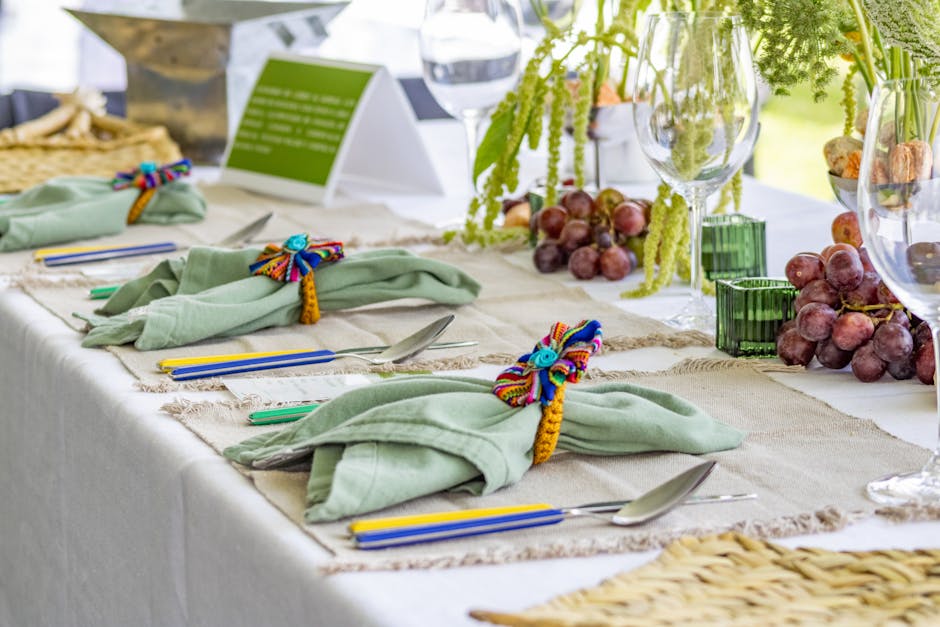
The green available in this set lands in a medium forest tone that photographs well against both wood and white tablecloths. Folded simply or dressed up with a napkin ring, they do the job cleanly.
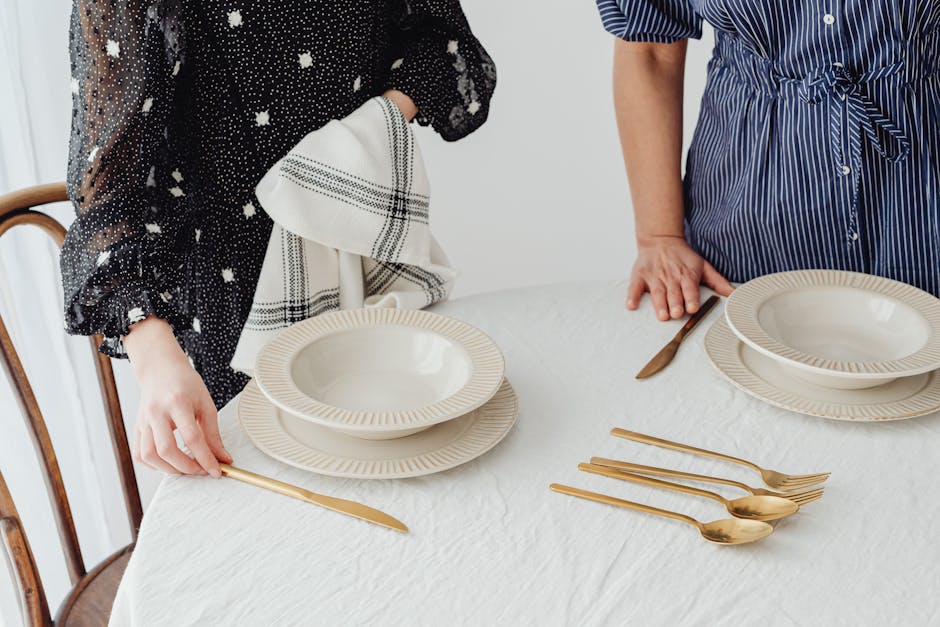
,
Check current price on Amazon.
April Cornell Garden Floral Cloth Napkins Set of 4
Botanical prints done poorly look craft-fair; done well, they look like an heirloom. The April Cornell Garden Floral Cloth Napkins Set of 4 lands firmly in the latter category, and the green tones running through the floral print make them a natural fit for spring and summer tables.
These are 100% cotton and they behave like it , absorbent, soft, and noticeably improved after a few washes as the fibers relax. April Cornell designs their napkins to coordinate with their tablecloths, so if you’re already working with a piece from the same collection, the pairing is effortless. The caveat is the set count: four napkins means a table of eight requires two orders, which is worth factoring in before you commit.
For a dinner party where the table setting is doing real work , a garden party, a birthday lunch, a holiday brunch that deserves visual intention , these earn their place.
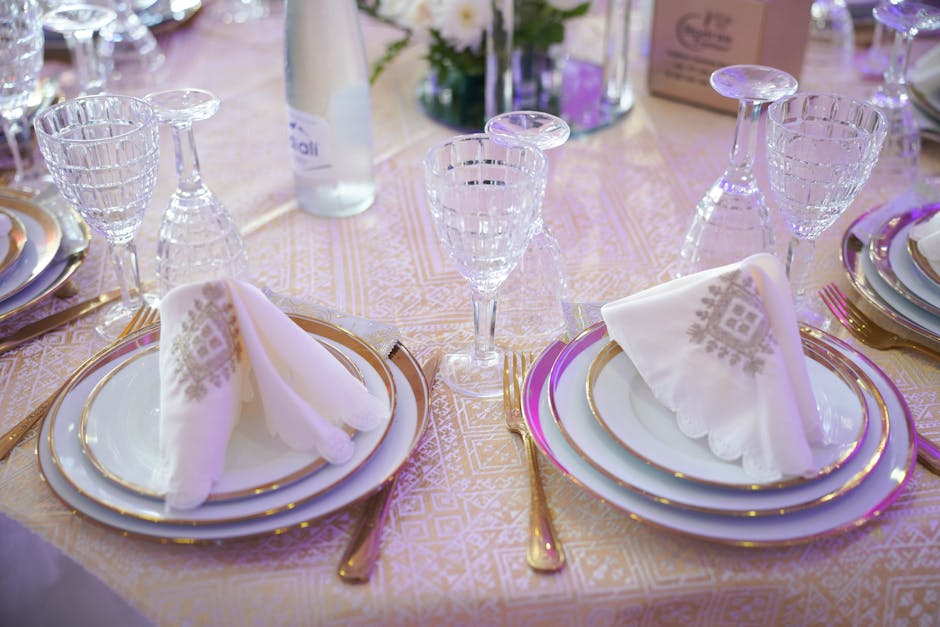
,
Check current price on Amazon.
Sferra Hemstitched Linen Napkins Set of 4
These are the napkins for the table you’re proud of. The Sferra Hemstitched Linen Napkins Set of 4 are made from Italian linen with a hand-hemstitched border , the kind of finishing detail that reads immediately to anyone who knows what they’re looking at, and registers as simply beautiful to anyone who doesn’t.
Linen has a specific quality that cotton can’t replicate: it improves. The fiber softens with each wash, develops a subtle sheen over time, and gains drape that a new piece doesn’t have. These napkins ten washes from now will feel better than they do out of the package. That’s not common in tabletop textiles.
The honest caveat is the ironing requirement. Linen pressed flat is one of the most satisfying things to set on a table. Linen pulled unironed from the dryer is a wrinkled heap. If you’re willing to press after washing , and for a formal entertaining piece at this level, that’s a reasonable expectation , these will outlast everything else on this list by years.
,
Check current price on Amazon.
How to Choose
How Many Napkins Do You Actually Need
The math on napkin quantity is easy to underestimate. One napkin per seat per meal sounds simple until you’re hosting eight people at a dinner party two nights in a row, or you want to run the full set through the wash before re-use. A practical working number for regular entertainers is one and a half to two full sets of your seat count , for a table of six, that means ten to twelve napkins at minimum.
Sets of four are fine for intimate households or as a supplementary purchase to round out a collection. For anyone building a cloth napkin wardrobe from scratch, starting with a set of twelve makes more logistical sense than buying three sets of four.
Matching Your Use Case to the Right Fiber
Everyday use and formal entertaining demand different things from a napkin, and there’s no single fabric that optimizes for both equally well. A cotton-poly blend at a Monday night dinner is perfectly appropriate; the same napkin at a Thanksgiving table that’s been set with heirloom china reads slightly off. The reverse is also true , pressing Italian linen for a casual Tuesday lunch is more ceremony than the meal requires.
The cleanest approach is to own two tiers: a workhorse set in cotton or cotton-poly for daily use, and a smaller formal set in linen for occasions that earn them. That way neither set is being asked to do a job it wasn’t designed for. Browsing through table linens by material is the fastest way to see what’s available in each fiber category.
Coordinating Color and Pattern
Green is one of the more versatile napkin colors in the spectrum , it works against white, cream, natural wood, and stone tablescapes without fighting for attention. The specific green matters, though. A warm sage coordinates differently than a deep forest, and a botanical print reads at a different register than a solid.
If you’re coordinating napkins with an existing tablecloth, err toward buying the napkins from the same brand or collection when possible. Color matching across manufacturers is unreliable. When that’s not an option, pulling a coordinating neutral rather than trying to match the exact green is usually the more forgiving choice.
Care and Longevity
The napkins you’ll actually use are the ones you’re not afraid to put in the wash. For most buyers, that means setting a realistic expectation for care before choosing a fabric. Cotton-poly blends are the lowest-maintenance option , cold wash, low dry, minimal ironing required. Pure cotton sits one step up: it wrinkles more and benefits from a light press, but is still machine washable without ceremony.
Linen requires the most attention. Cold or warm wash, not hot. Tumble dry low or line dry. Press while slightly damp for best results. The reward for that care is a napkin that genuinely improves over years of use , a return on investment that the lower-maintenance options can’t offer.
Folding and Presentation
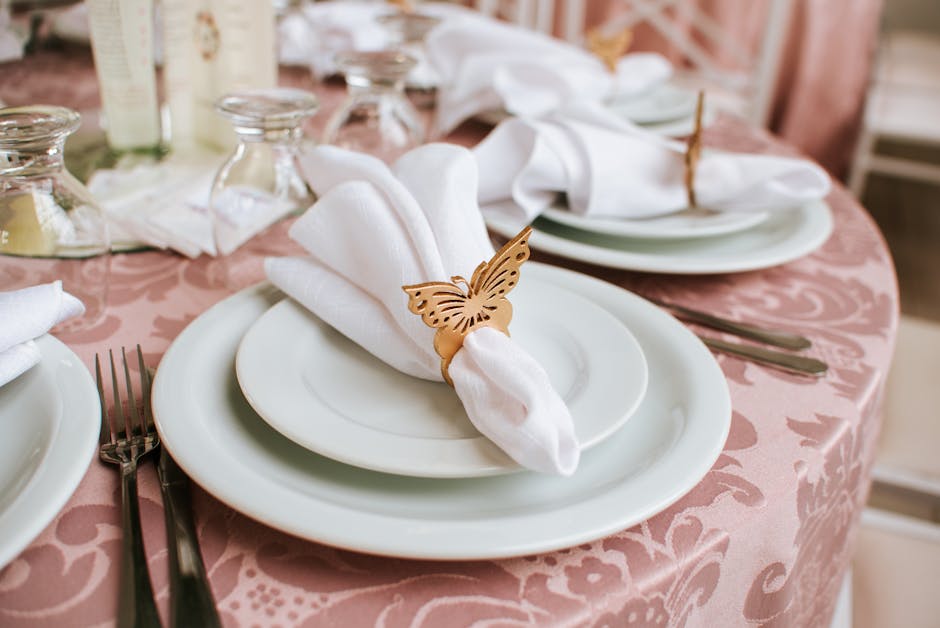
A napkin that holds a fold adds something to the table before anyone sits down. Stiffer weaves , tightly woven cotton, pressed linen , hold elaborate folds well. Softer, more relaxed fabrics are better suited to a simple flat fold or a loose roll in a napkin ring.
For everyday tables, a rectangular fold or a simple bishop’s hat is entirely sufficient. For a formal setting, a pressed linen napkin folded in thirds and placed squarely on the plate is one of those details that guests notice without knowing why the table feels so deliberate. The fold is the last finishing touch , the fabric and the pressing do the real work.
Frequently Asked Questions
Are cloth napkins in green colorways going to fade after washing?
Color retention depends primarily on fiber content, dye quality, and wash temperature. Washing in cold water and drying on low heat , or line drying , significantly slows fading. Cotton-poly blends tend to hold color well across many wash cycles. Pure linen and cotton are more susceptible to fading if washed in hot water or dried in direct sunlight.
How many cloth napkins should I buy for a dinner party of eight?
At minimum, buy eight napkins , one per guest. For practical purposes, having twelve to sixteen is more workable, especially if you’re hosting across consecutive evenings or want to launder the full set between uses. Sets of twelve, like the Utopia Kitchen set, are the most efficient starting point for a household that entertains regularly.
What is the difference between linen and cotton napkins for everyday use?
Cotton and cotton-poly blends are easier to maintain , they wrinkle less, dry faster, and require minimal ironing. Linen is more durable over time and softens with repeated washing, but it needs pressing after each launder to look its best. For daily use, cotton is the more practical choice. For formal dinners or a table you’ve invested in styling, linen earns the extra care.
Can I mix a floral napkin with a solid tablecloth?
Yes, and it’s often the better choice. A botanical print napkin like the April Cornell Garden Floral set reads well against a solid white, ivory, or natural linen tablecloth , the print provides the visual interest while the solid keeps the overall table from feeling busy. The key is ensuring at least one color in the napkin’s print is echoed elsewhere on the table, whether in the centerpiece, dinnerware, or place settings.
Do I need to iron cloth napkins before every use?
For cotton-poly blends, ironing is optional , a smooth fold often reads as neat enough for casual and semi-formal settings. For pure cotton, a light press noticeably improves appearance. For linen napkins like the Sferra hemstitched set, ironing is genuinely part of the intended use , pressed linen has a formality and crispness that unironed linen simply doesn’t. Whether the occasion demands that formality is the deciding question.
Frequently Asked Questions
Linen or cotton napkins for everyday use — which is the better choice?
Cotton and cotton-poly blends are easier to maintain: they wrinkle less, dry faster, and require minimal ironing. Linen is more durable over time and softens with repeated washing, but it needs pressing after each launder to look its best. For daily use the Utopia Kitchen cotton-poly set is the more practical choice. For a formal table or occasions where the napkin quality is part of the impression, the Sferra hemstitched linen earns the extra care.
Will green cloth napkins fade after repeated washing?
Color retention depends primarily on fiber content, dye quality, and wash temperature. Washing in cold water and drying on low heat — or line drying — significantly slows fading. Cotton-poly blends like the Utopia Kitchen set tend to hold color well across many wash cycles. Pure linen and cotton are more susceptible to fading if washed in hot water or dried in direct sunlight.
How many napkins should I buy for a dinner party of eight?
At minimum buy eight — one per guest. For practical purposes, twelve to sixteen is more workable, especially if you're hosting across consecutive evenings or want to launder the full set between uses. Sets of twelve, like the Utopia Kitchen set, are the most efficient starting point for a household that entertains regularly.
Can a floral print napkin work with a solid tablecloth?
Yes, and it is often the better choice. A botanical print napkin like the April Cornell Garden Floral reads well against a solid white, ivory, or natural linen tablecloth — the print provides visual interest while the solid keeps the overall table from feeling busy. The key is ensuring at least one color in the napkin's print is echoed elsewhere on the table, whether in the centerpiece, dinnerware, or place settings.
Do I need to iron green cloth napkins before every use?
For cotton-poly blends ironing is optional — a smooth fold often reads as neat enough for casual and semi-formal settings. For pure cotton, a light press noticeably improves appearance. For linen napkins like the Sferra hemstitched set, ironing is genuinely part of the intended use: pressed linen has a formality and crispness that unironed linen simply does not. Whether the occasion demands that formality is the deciding question.
Where to Buy
Utopia Kitchen Cloth Dinner Napkins Green Set of 12See Utopia Kitchen Cloth Dinner Napkins G… on Amazon