Decanter vs Carafe: Key Differences and When to Use Each

Affiliate disclosure: Some links on this page are affiliate links. If you buy through them we earn a small commission at no extra cost to you. Recommendations are research-driven; we don't claim personal use of every product reviewed. Product prices and availability are accurate as of the date published and are subject to change. Always check Amazon for current pricing before purchasing. Learn more.
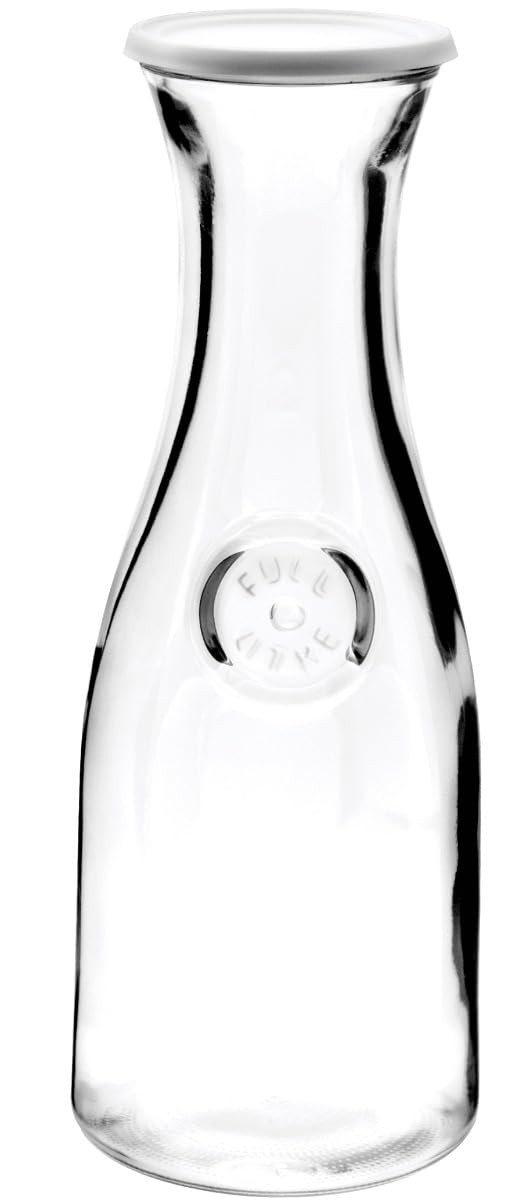 Anchor Hocking Anchor Hocking 1.5-Liter Glass Carafe with Lid Buy on Amazon
 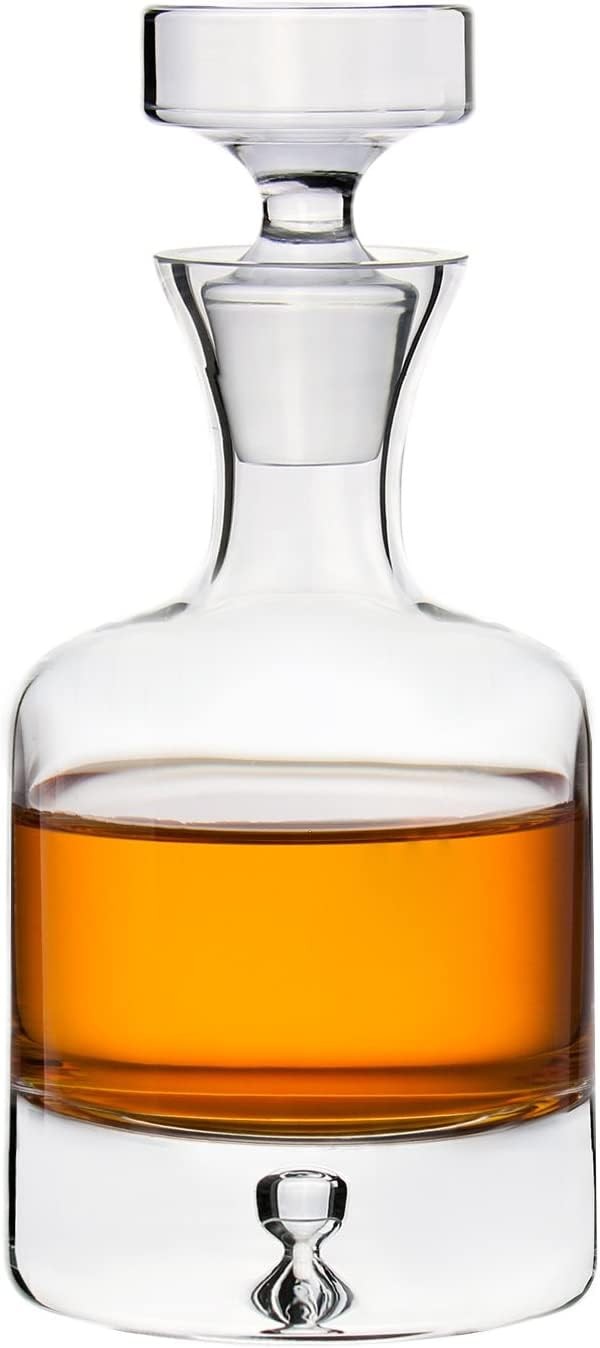 Ravenscroft Crystal Ravenscroft Crystal Taylor Whiskey Decanter Buy on Amazon
 Most people searching for a decanter have already decided they want something that looks intentional on the table , the question is whether they need the particular shape and function a decanter provides, or whether a well-made carafe does the job more honestly. These two vessels are not interchangeable, and treating them as if they were leads to the wrong purchase every time.
The Anchor Hocking 1.5-Liter Glass Carafe with Lid and the Ravenscroft Crystal Taylor Whiskey Decanter represent opposite ends of that question. One is designed for water and juice at the everyday table. The other is a spirit vessel built for display and slow oxidation. Understanding what separates them makes this an easy call for most buyers.
At a Glance
Before getting into the detail, the short version: if you are serving water, juice, or even wine at a casual table, the carafe is the right tool. If you are storing and presenting whiskey or another spirit with any seriousness, the decanter is the right tool. The overlap between these two use cases is small enough that most buyers will know which category they fall into after reading one more section.
Both pieces earn their place in a well-considered Glassware & Crystal collection , they simply earn it in different rooms, for different occasions, and for different liquids.
Why Choose the Anchor Hocking Carafe
Anchor Hocking 1.5-Liter Glass Carafe with Lid
For everyday table service , water at dinner, juice at brunch, iced tea on the patio , the Anchor Hocking 1.5-Liter Glass Carafe with Lid is the clearest, most practical answer I’ve found at the budget end of the market. The 1.5-liter capacity handles a full table of four without a second trip to the kitchen. The included lid keeps still water cold and dust-free between uses.
The glass is thick enough to feel substantial without being heavy when full. Anchor Hocking’s manufacturing is consistent , Pieces from this line have been in use for years without the clouding or micro-scratching that can develop in cheaper pressed glass after repeated dishwasher cycles. That dishwasher-safe designation is not a small thing if you’re using this piece daily.
The one honest limitation is the pour. The wide mouth that makes this carafe easy to fill and easy to clean also means there’s no collar to control the flow. On a deliberate, slow pour it’s fine. On a quick pour mid-conversation, there’s a drip. It is a minor frustration rather than a design flaw, but worth knowing before you set it on a white tablecloth.
,
Check current price on Amazon.
Why Choose the Ravenscroft Decanter
Ravenscroft Crystal Taylor Whiskey Decanter
A whiskey decanter’s job is different from a carafe’s in almost every respect. It stores spirit safely over time, introduces controlled oxidation, and presents the liquid in a way that signals the occasion. The Ravenscroft Crystal Taylor Whiskey Decanter does all three without the lead content concerns that come with traditional full-lead crystal.
The wide base is not aesthetic preference , it increases the surface area of spirit exposed to air, which matters if you’re decanting a whiskey you want to open up over a few days. The flat-cut polished pattern reads as formal without crossing into ornate. It works on a bar cart in a modern apartment as naturally as it does on a mahogany sideboard. That range of fit is harder to achieve than it looks.
The stopper deserves attention before you commit. Crystal stoppers are beautiful and they seal well, but they require immediate hand-drying after washing. Calcium deposits that form around the stopper collar are genuinely difficult to remove once set. If your household runs through the dishwasher without a second thought, this piece will show it quickly. It rewards care. Buyers who aren’t willing to give it that care would be better served by a borosilicate decanter with a silicone-fitted stopper.
,
Check current price on Amazon.
How to Choose
What Liquid Are You Serving?
This is the only question that truly determines which vessel belongs in your cabinet. Carafes are designed for non-spirit table liquids , water, juice, cold brew, diluted wine for casual meals. Decanters are designed for spirits and, in some configurations, wine that benefits from aeration. Putting whiskey in a carafe with a plastic lid is not wrong, exactly, but it sidesteps everything a proper decanter is built to do. Putting water in a crystal decanter with a ground-glass stopper is an unnecessary use of a piece that performs best with spirits.
Everyday Use vs. Occasional Display
The Anchor Hocking carafe is built for repetition. Daily fills, weekly washes, years of regular table service without ceremony. The Ravenscroft decanter is built for intention. You fill it when you open a bottle worth presenting, you set it somewhere it will be seen, and you wash it with care. Neither of those use patterns is better , they’re just different commitments. Buying a crystal decanter for everyday water service means accepting that it will age faster than it should.
Storage and Sealing
A carafe with a lid stores refrigerated beverages cleanly. A decanter with a crystal stopper seals a spirit well enough for medium-term storage , weeks, not months , but is not designed for airtight long-term preservation. If long-term spirit storage is your goal, a sealed bottle in a cool, dark space does the job better than any decanter. The decanter is for active use and presentation, not archival storage. Understanding that distinction prevents disappointment.
Material and Care Tolerance
Lead-free crystal like the Ravenscroft is safe for spirit contact and noticeably more brilliant than standard glass. It is also more demanding. The Anchor Hocking carafe asks almost nothing of you , dishwasher, done. The Ravenscroft asks for hand-washing, immediate drying, and attention to the stopper collar. Before choosing the crystal piece, be honest about your actual habits rather than your ideal ones.
Fit with Your Table and Bar
Vessel choice is also a matter of context. A crystal decanter on a casual kitchen table at Tuesday dinner feels mismatched in the same way a plastic carafe on a formal bar cart does. Think about where the piece will live most of the time. The best resource for matching glassware to setting and occasion across categories is a well-curated glassware guide , browsing the full range before committing to one piece saves money and returns.
Verdict
These two pieces should not be compared as if one is a better version of the other. They are designed for different purposes, different liquids, and different occasions.
If you are setting a table for water or juice service, or want an affordable, practical vessel for casual entertaining, the Anchor Hocking 1.5-Liter Glass Carafe with Lid is the right answer. It is honest about what it is, easy to maintain, and impossible to fault at its price band.
If you are serious about whiskey , or any spirit you want to present with intention , the Ravenscroft Crystal Taylor Whiskey Decanter earns its place. The lead-free crystal, the wide base, and the restrained cut pattern make it a mid-range piece that performs above its category. It requires care. Given that care, it lasts.
The clear winner depends entirely on what you’re pouring. That is not a hedge , it is the answer.
For buyers still exploring how decanters, carafes, and other serving vessels fit into a complete table, the full Glassware & Crystal collection is a useful place to orient before committing to a single piece.
Frequently Asked Questions
Can I use a whiskey decanter for wine?
A whiskey decanter works for wine in a functional sense , the liquid won’t be harmed. The shape, however, is optimized for spirits, not aeration. A wide-bottomed whiskey decanter like the Ravenscroft Crystal Taylor Whiskey Decanter has less surface-area-to-volume ratio than a proper wine decanter, so oxygen exposure is less efficient. For occasional informal use it’s acceptable; for serious wine service, a purpose-built wine decanter is worth the investment.
Is a carafe the same as a decanter?
No. A carafe is an open-mouthed vessel for serving non-spirit table beverages , water, juice, cold brew. A decanter is a sealed or close-fitted vessel designed for spirits or wine that benefits from controlled aeration. The Anchor Hocking carafe is explicitly a table-service piece.
How long can whiskey stay in a decanter?
Most sources suggest three to six months as a reasonable outer limit for a crystal decanter with a well-fitted stopper. Beyond that, minor oxidation and any micro-porosity in the stopper seal begin to affect flavor. Decanters are presentation and medium-term storage tools, not indefinite replacements for the original bottle. If you are storing a spirit you care about for more than a few months, return it to its sealed bottle.
Does lead-free crystal affect taste?
Lead-free crystal does not leach into beverages the way traditional lead crystal can over long contact periods. The Ravenscroft’s lead-free formulation is safe for spirit storage. The practical taste difference between lead-free crystal and standard glass, for most palates in most conditions, is negligible , the visual brilliance is the more meaningful distinction for buyers at this price band.
Which is easier to clean , the carafe or the decanter?
The carafe is significantly easier. The Anchor Hocking carafe is dishwasher safe and has a wide mouth that accommodates a standard bottle brush. The Ravenscroft decanter requires hand-washing, immediate drying, and careful attention to the crystal stopper collar to prevent calcium deposits. If low-maintenance care is a priority, the carafe wins outright.
Frequently Asked Questions
Decanter versus carafe — what is the actual difference?
A carafe is an open-mouthed vessel for serving non-spirit table beverages — water, juice, cold brew. A decanter is a sealed or close-fitted vessel designed for spirits or wine that benefits from controlled aeration. The Anchor Hocking carafe is explicitly a table-service piece. The Ravenscroft is a spirit vessel. The shapes, materials, and care requirements reflect those different purposes, and treating them as interchangeable leads to the wrong purchase.
Can I use a whiskey decanter for wine?
A whiskey decanter works for wine in a functional sense — the liquid will not be harmed. The shape, however, is optimized for spirits rather than aeration. A wide-bottomed whiskey decanter like the Ravenscroft Crystal Taylor has less surface-area-to-volume ratio than a purpose-built wine decanter, so oxygen exposure is less efficient. For occasional informal use it is acceptable; for serious wine service, a proper wine decanter is worth the separate investment.
How long can whiskey stay in a crystal decanter before it degrades?
Most sources suggest three to six months as a reasonable outer limit for a crystal decanter with a well-fitted stopper. Beyond that, minor oxidation and any micro-porosity in the stopper seal begin to affect flavor. Decanters are presentation and medium-term storage tools, not indefinite replacements for the original bottle. If you are storing a spirit you care about for more than a few months, return it to its sealed bottle.
Which is easier to clean — the Anchor Hocking carafe or the Ravenscroft crystal decanter?
The carafe is significantly easier. The Anchor Hocking is dishwasher safe and has a wide mouth that accommodates a standard bottle brush. The Ravenscroft decanter requires hand-washing, immediate drying, and careful attention to the crystal stopper collar to prevent calcium deposits that are genuinely difficult to remove once set. If low-maintenance care is a priority, the carafe wins outright.
Is lead-free crystal safe for storing spirits, and does it affect the taste?
Lead-free crystal does not leach into beverages the way traditional lead crystal can over long contact periods. The Ravenscroft's lead-free formulation is safe for spirit storage. The practical taste difference between lead-free crystal and standard glass is negligible for most palates — the visual brilliance and the wide base designed for controlled oxidation are the more meaningful distinctions for buyers at this price point.
Where to Buy
Anchor Hocking 1.5-Liter Glass Carafe with LidSee Anchor Hocking 1.5-Liter Glass Carafe… on Amazon